A Proposed Energy Storage Project in Scott County

Manages surging power demand from growing industrial sector
Lowers electricity costs by providing power during peak times
Stabilizes the local grid during extreme temperatures
Helps prevent rolling blackouts
Safety is Priority #1
The Monarch Energy Storage project features safety measures that follow the latest guidelines and legislation. In contrast with older systems that have experienced significant safety issues, Monarch’s design is based on next generation technology: Modular battery units are housed within sealed, steel containers meeting all national safety standards and testing. Each container will feature continuous temperature and voltage monitoring as well as specialized fire suppression systems. Each container will be physically separated by a buffer zone of several feet, consistent with the most up-to-date national fire codes for energy storage systems (NFPA 855). In addition, the batteries planned for Monarch will utilize lithium-iron phosphate (LFP) chemistry, which is much more stable than the currently widely deployed nickel-manganese-cobalt (NMC) chemistry. The project is being planned with input from the local fire protection district, along with ESRG, a national fire safety consulting firm specializing in battery technology, to ensure it meets or exceeds all relevant fire and code regulations. The project will also develop an emergency response plan in close coordination with local emergency response agencies and will include notification and communication procedures for the surrounding community.
Replace carbon-based energy
Strengthen our local electricity grid
Lowers electricity costs by providing power during peak times
Manages surging power demand from growing industrial sector
Stabilizes the local grid during extreme temperatures
Helps prevent rolling blackouts
Safety is Priority #1
The Monarch Energy Storage project features safety measures that follow the latest guidelines and legislation. In contrast with older systems that have experienced significant safety issues, Monarch’s design is based on next generation technology: Modular battery units are housed within sealed, steel containers meeting all national safety standards and testing. Each container will feature continuous temperature and voltage monitoring as well as specialized fire suppression systems. Each container will be physically separated by a buffer zone of several feet, consistent with the most up-to-date national fire codes for energy storage systems (NFPA 855). In addition, the batteries planned for Monarch will utilize lithium-iron phosphate (LFP) chemistry, which is much more stable than the currently widely deployed nickel-manganese-cobalt (NMC) chemistry. The project is being planned with input from the local fire protection district, along with ESRG, a national fire safety consulting firm specializing in battery technology, to ensure it meets or exceeds all relevant fire and code regulations. The project will also develop an emergency response plan in close coordination with local emergency response agencies and will include notification and communication procedures for the surrounding community.
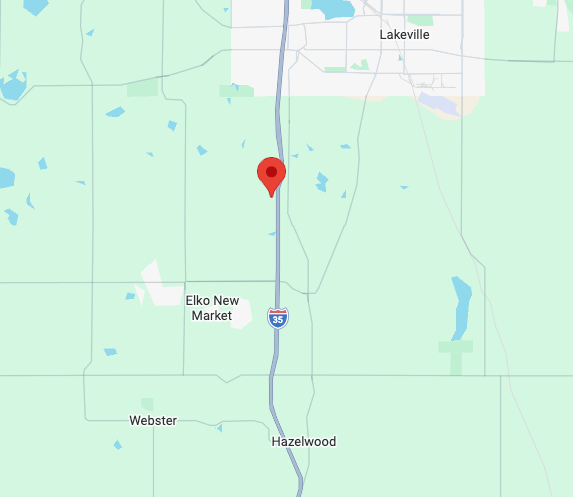
The Monarch Energy Storage project is envisioned to store energy at a proposed site adjacent to the Great River Energy (GRE) Chub Lake transmission substation off I-35 and 245th Street E. The project will establish critical new infrastructure that will strengthen the electrical grid locally, while contributing to more reliable and affordable power for the community.
The project achieves this by storing energy in batteries for use during peak energy demand periods, helping to reduce electricity prices and mitigating the potential for rolling blackouts. In addition, the stored energy supports disaster preparedness, response and recovery.
New Leaf Energy, Inc. proposes to develop a 135-MW Battery Energy Storage System (BESS) using safe and reliable lithium iron phosphate (LFP) batteries on approximately 8 acres of an existing 40-acre agricultural field off Logan Avenue, adjacent to the Chub lake substation, on the west side of I-35. The project will be permitted through the Minnesota Public Utilities Commission (MPUC) under the Minnesota Energy Infrastructure Permitting Act (Minn. Stat. Ch. 216I), with Monarch Storage submitting a joint Site Permit Application for the BESS site and a Route Permit Application for the associated generation tie (gen-tie) line.
Safety is Priority #1
The Seahawk Energy Storage project features safety measures that follow the very latest California guidelines and legislation. In contrast with older systems that have experienced significant safety issues (such as the Jan. 17, 2025 fire at Moss Landing), Seahawk includes new technology battery units that are housed within purpose-built, sealed, steel containers meeting national fire safety standards and testing. Each container will feature on-board heat monitoring and specialized fire suppression systems, and each container will be physically separated by a buffer zone of several feet consistent with the most updated California Fire Codes for energy storage systems. In addition, the batteries planned for Seahawk will utilize lithium phosphate (LFP) chemistry, which is much more stable than the currently widely deployed nickel-manganese-cobalt (NMC) chemistry. The project is being planned in collaboration with the Pajaro Valley Fire Protection District and CALFIRE, with input from other nearby by fire protection agencies, to ensure it meets or exceeds all relevant fire regulations. The project will also follow the provisions of Senate Bill 38, authored by Senator John Laird, which establishes protocols to protect the health and well-being of workers and surrounding communities. Specifically, SB 38 requires the development of an emergency response plan, to be created in close coordination with local emergency response agencies and submitted to local government, as well as a notification and communication procedure.
Our Mission is Decarbonization
A Proposed Energy Storage Project in Santa Cruz County
Helps prevent rolling blackouts
Supports clean, renewable energy
Replaces carbon-based energy
Strengthens our local electricity grid
Safety is Priority #1
The Seahawk Energy Storage project features safety measures that follow the very latest California guidelines and legislation. In contrast with older systems that have experienced significant safety issues (such as the Jan. 17, 2025 fire at Moss Landing), Seahawk includes new technology battery units that are housed within purpose-built, sealed, steel containers meeting national fire safety standards and testing. Each container will feature on-board heat monitoring and specialized fire suppression systems, and each container will be physically separated by a buffer zone of several feet consistent with the most updated California Fire Codes for energy storage systems. In addition, the batteries planned for Seahawk will utilize lithium phosphate (LFP) chemistry, which is much more stable than the currently widely deployed nickel-manganese-cobalt (NMC) chemistry. The project is being planned in collaboration with the Pajaro Valley Fire Protection District and CALFIRE, with input from other nearby by fire protection agencies, to ensure it meets or exceeds all relevant fire regulations. The project will also follow the provisions of Senate Bill 38, authored by Senator John Laird, which establishes protocols to protect the health and well-being of workers and surrounding communities. Specifically, SB 38 requires the development of an emergency response plan, to be created in close coordination with local emergency response agencies and submitted to local government, as well as a notification and communication procedure.

The BESS will use LFP battery technology — a chemistry chosen for its stability and safety. Key site components include:
-
Battery modules housed in purpose-built, weatherproof metal enclosures with integrated power conversion equipment and individual fire suppression systems.
-
Inverters and transformers to convert and step up power for grid delivery.
-
Collector substation (~1.45 acres) located on the southwest side of the BESS yard.
-
SCADA system (Supervisory Control and Data Acquisition) for continuous remote monitoring and emergency remote shut-off capability.
-
Operations and Maintenance area and temporary construction staging areas.
The entire facility will be enclosed within a 10-foot-high concrete masonry unit wall, with landscape screening in front of the wall to provide a visual barrier. The entrance gate off Logan Avenue will remain locked at all times, with emergency contact information and project details posted at the entrance.
The BESS site will be accessed via an improved access road off Logan Avenue. A construction laydown/staging area is proposed south of the access road for use during the construction phase.
The BESS site will be accessed via an improved access road off Logan Avenue. A construction laydown/staging area is proposed south of the access road for use during the construction phase.
The project will connect to the regional grid via a new ~0.5-mile, 115-kilovolt (kV) gen-tie line running southeast from the project substation to the existing 115 kV Chub Lake substation. The line totals approximately 2,282 feet, combining overhead and underground segments:
Segment | Length | Type |
|---|---|---|
Final approach to Chub Lake substation | 497 ft | Overhead |
Continuing south/southeast | 695 ft | Underground |
Collector substation heading east, crossing I-35 | 1,090 ft | Overhead |
The specific method of interconnection will be determined by Great River Energy (GRE).

About New Leaf Energy
New Leaf Energy develops large-scale solar and energy storage systems in the US. New Leaf Energy takes the safety of residents near our projects very seriously, which is why our multi-layered approach to designing and developing energy storage systems puts safety at the center of every decision.